


Last Updated: October 28, 2026
Quick Summary
To read tides for surf fishing, check a tide chart for the high and low times at the station nearest your beach, then fish the two to three hours either side of a tide change, when water movement is strongest. Confirm the predicted times against the actual water when you arrive, since wind and beach shape can shift them.
- Choose the tide station closest to your beach, since distant charts can differ noticeably.
- Tide times shift by about 50 minutes each day, so re-check the chart before every session.
- Fish the two to three hours either side of a tide change, when fish are most active.
- The gap between high and low water is the tidal range, and larger ranges usually mean stronger current.
- Be off the beach before the falling tide strengthens the current and pulls water out through the gutters.
Table of Contents
- Why Tides Matter for Surf Fishing
- How to Read a Tide Chart for Fishing, Step by Step
- Tidal Range, Spring and Neap Tides, and Current Speed
- Is the Incoming or Outgoing Tide Better for Surf Fishing?
- Surf Fishing at Low Tide: What to Look For on the Beach
- Surf Fishing Tides and Current: Reading the Water
- Planning Your Next Session: Tide, Safety and Gear
- Frequently Asked Questions
Why Tides Matter for Surf Fishing
Read tides before you pack the car. In Australian surf, the water level and the moving current decide where fish feed, and a tide chart tells you when those conditions line up.
Most beginners fish whenever they have a free morning. Experienced surf anglers plan around the water. A rising or falling tide moves bait, stirs up the sand, and pushes fish into the gutters and holes along the beach. Check the tide before you check the forecast.
Tides also change how you fish. At high tide the water covers the sandbars, so you cast into deeper water. At low tide you may be able to walk out to the gutters and cast over the bars. Knowing which one you're facing saves you a lot of wasted casts.
How to Read a Tide Chart for Fishing, Step by Step
A tide chart is a prediction table, not a fishing forecast. It tells you when the water is expected to peak and bottom out at a specific station, and how high or low it should get.
Here is a practical walk-through of a single day's chart entry, using a typical format you will see for a beach station:
| Time | Height (m) | Tide state |
|---|---|---|
| 05:42 | 0.4 | Low |
| 11:58 | 1.6 | High |
| 18:10 | 0.5 | Low |
Step 1, Find the station closest to your beach. Tide predictions are calculated for a specific location.
Step 2, Read the times in order. In the example above, the water is falling from midnight until 05:42, rising from 05:42 to 11:58, and falling again from 11:58 to 18:10.
Step 3, Note the interval between highs and lows. The gap between successive high and low tides is roughly six hours and 12 minutes, which is why tide times shift by about 50 minutes each day. That daily shift is the reason a window that worked last Saturday will be an hour later the following Saturday. If you fish the same beach regularly, note the shift rather than memorising a single time.
Step 4, Compare the heights. The difference between the high and the low is the tidal range for that cycle. In the example, the range is about 1.2 m (1.6 m high minus 0.4 m low).
Step 5, Identify your fishing window. Fish are most active when the water is moving, so the two to three hours either side of a tide change are usually the most productive. In the example, that gives you a window from roughly 09:00 to 11:58 on the rising tide and again from 11:58 to about 15:00 on the falling tide. If you can only fish one, pick the change that coincides with dawn or dusk, when fish often feed more confidently.
Step 6, Check the chart again on the day. Predictions are calculated well in advance and do not account for wind setup, low-pressure systems, or local flooding. A strong onshore wind can push water higher and later than predicted; a sustained offshore wind can hold it lower.
A common mistake is reading the chart once and treating the printed time as exact. Tide predictions are accurate to within a few minutes at the reference station, but the water at your gutter can arrive earlier or later depending on the shape of the beach. Use the chart to plan, and use your eyes to confirm.
Tidal Range, Spring and Neap Tides, and Current Speed
Tidal range is the gap between high and low water. A large range moves more water and often produces stronger current. A small range gives you a calmer, slower session.
Spring tides happen around the full and new moon. They have the biggest range. Neap tides happen around the quarter moons and have the smallest range. Many anglers rate spring tides as the most productive, but it depends on the beach and the target fish. Species like tarpon require a more nuanced approach to timing tides and seasons to ensure your bait is in the strike zone when the water movement is most favorable.
Current speed matters just as much as tide height. Strong current can make it hard to hold your bait in position. Use a heavier sinker or a star sinker so your bait stays put on the sand. Our Tec Tackle Star Sinkers are made to bury themselves in sandy beach gutters, which helps hold your bait when the water moves.

Is the Incoming or Outgoing Tide Better for Surf Fishing?
Both can work. The answer depends on the beach and the species you want.
An incoming tide pushes bait toward the shore. Fish often follow it in. Many anglers find the first hour or two of a rising tide productive.
An outgoing tide pulls bait and small prey out through the gutters. Predators wait in the channels to ambush it. Outgoing tides are often good for bigger fish.
Try both if you can. Note what you catch and when, and build your own pattern over time.
Surf Fishing at Low Tide: What to Look For on the Beach
Low tide shows you the structure of the beach. Walk the sand before you cast and look for these features:
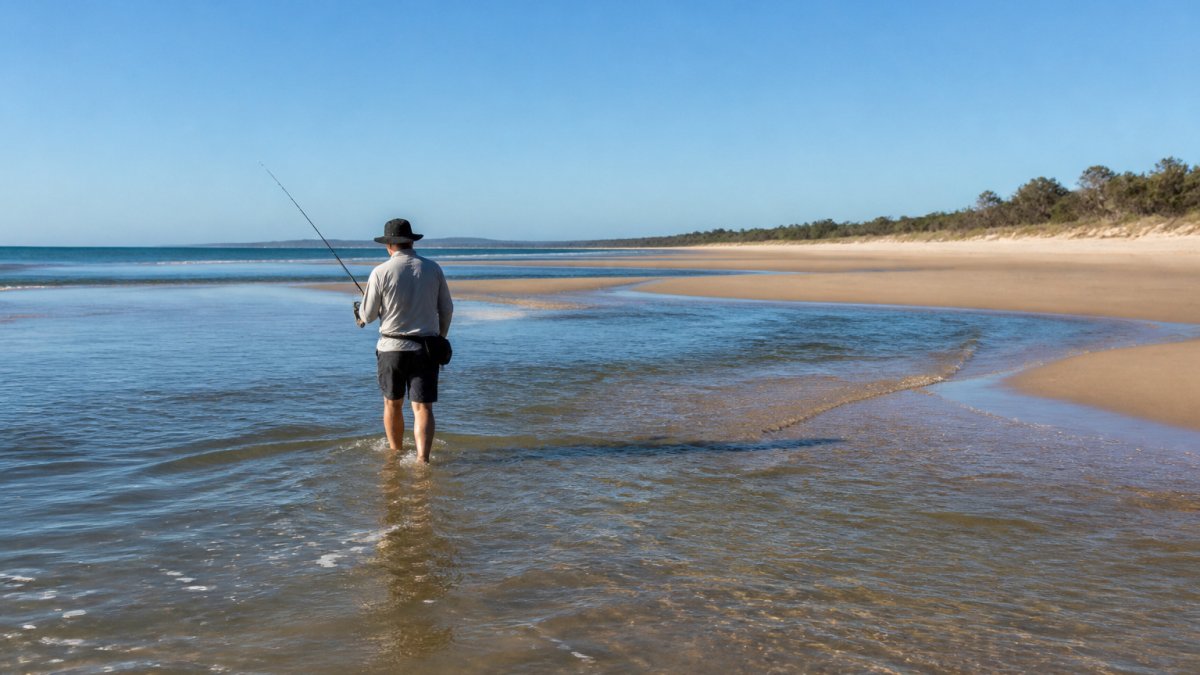
- Gutters: Channels between sandbars where water runs deeper
- Sandbars: Raised banks that fish use as ambush points
- Holes and troughs: Deeper pockets where fish rest out of the current
- Rips: Strong currents running out through the surf
Pick out a gutter close to shore and cast beyond the bar. Use a reel built for distance and saltwater. The Shimano Baitrunner Long Cast XTB Surf Spin Reel features a long cast AR-C spool design and shielded AR-B bearings.

Be careful on the beach at low tide. The water can rise quickly, and sandbars can trap you against the surf. Never fish alone in unfamiliar water, and always keep a clear path back to dry sand.
Surf Fishing Tides and Current: Reading the Water
Reading the water is the skill that ties everything together. Look at the colour, the foam lines, and the way the waves break.
Darker, deeper water often marks a gutter. Breaking waves that stop suddenly can show a sandbar. Foam lines moving steadily out to sea show a rip, and rips can carry bait to waiting fish.
Match your rod and lure to the water. The Shimano 24 Exvance Spin Rods feature high-quality carbon blanks and Fuji K frame guides.

Watch out: rips can pull you off your feet. Stay out of strong current, and fish from the sand rather than wading out into the rip.
Planning Your Next Session: Tide, Safety and Gear
A tide chart gives you a time and a height. A session plan turns those numbers into a decision about where to stand, when to cast, and when to leave.
The scenario. You want to fish a surf beach on a Saturday. The chart shows low tide at 06:10 (0.3 m), high tide at 12:22 (1.7 m), and the next low at 18:40 (0.4 m).
When to arrive. Be on the beach by 05:30, before the low. At low tide you can walk the sand and read the structure, gutters, sandbars, holes and rips, while the water is off the beach.
Where to cast. Fish the first two hours of the rising tide (roughly 06:10 to 08:30) into the gutter you identified at low. As the water rises, the fish often move with it, so be prepared to step back up the beach and adjust your cast to stay on the edge of the gutter rather than casting over the bar into shallow water.
When to move. Around 10:00 to 12:00, as the tide approaches high, the water covers the sandbars and the gutter you marked may become less distinct.
When to leave. Plan to be off the beach by about 16:00, before the falling tide pulls water out through the gutters and the current strengthens.
Safety and access checks before you go:
- Cut-off routes. On many beaches, a headland or rock shelf that is passable at low tide becomes impassable at high. Identify your exit before you need it, and never let the rising water get between you and dry sand.
- Rising water speed. A moderate range can still move water across flat sand faster than you expect. Keep your gear above the high-water mark and watch the water line, not the clock.
- Surf conditions. Check the surf forecast as well as the tide. A rising tide combined with a building swell can make the beach unsafe even if the tide chart looks friendly.
- Local verification. Tide predictions vary by location and are affected by wind, pressure and local conditions. Compare the predicted time with what you actually see, and ask at a local tackle shop or check a surf report for your beach before committing.
Gear for the plan. A medium spin rod, a reel with a reliable drag, a few star sinkers for holding bottom in the current, and a couple of lures for when the fish are feeding higher in the water will cover most sessions. Pack a waterproof scale if you want to record your catch accurately, and keep a tide chart or app on your phone so you can re-check the prediction during the session.
Our expert team provides personalised fishing advice. You can shop online or visit our stores in Wollongong or Taren Point.
Frequently Asked Questions
What tide is best for surf fishing?
There is no single best tide, but many surf anglers favour the two hours either side of a moving tide, when water is shifting and fish are more active. Check your local tide chart, then compare it with what you see on the beach. Sandbars and gutters often fish best on a falling or rising tide, depending on how the beach is shaped. Keep notes of what works at your spot over several sessions, because local structure matters as much as the timing.
Is surf fishing better at high tide or low tide?
Both can produce fish. High tide brings water up over the sand and can put fish within casting range of the shore, while low tide exposes gutters, channels and sandbar edges where fish feed. Low tide often suits anglers who can read the beach and cast accurately to structure. High tide is useful when the water is deep enough to hold fish close in. Try both stages at your beach and compare results.
Is the incoming or outgoing tide better for surf fishing?
Many anglers find the moving water of either tide productive, since bait gets washed around and fish move in to feed. An incoming tide pushes baitfish toward the shore and into gutters, while an outgoing tide draws water and food out through channels. The best choice depends on your beach. Note which tide produces bites at your spot and repeat that pattern when conditions are similar.
How do you read a tide chart for fishing?
Start by finding the high and low tide times for your date and location. Note the height of each tide and whether the water is rising or falling between them. Then look at the moon phase, since spring tides around new and full moons have a larger range than neap tides. Plan your session around the stage you want, and check the chart again on the day, because weather and swell can shift the actual water level.


