


Last Updated: November 19, 2026
Quick Summary
Upgrading your speargun reel and line is worth it because a quality reel lets you give line to a fighting fish and wind it back under control, so you stop losing fish that outrun your shooting line. Match reel capacity and line diameter to your target species, then spool under light, even tension.
- Gun reels suit reef and inshore hunting, while belt reels add line capacity for bigger fish.
- Dyneema is the preferred reel line for its abrasion resistance and strength at small diameters.
- A 50 m reel rated for 1.5 mm line holds noticeably less 2.0 mm line, so recalculate capacity.
- Dry-fit the reel and check the line guide clears the barrel before drilling any holes.
- Rinse the reel and line in fresh water after every saltwater dive to prevent failures.
Table of Contents
- Why a Reel Upgrade Changes How You Hunt
- Gun Reels vs Belt Reels: Which Fits Your Dive
- Choosing a Speargun Reel Line That Won't Let You Down
- Speargun Reel Capacity: Matching Spool Size to Target Species
- Speargun Reel Setup and Mounting Without Guesswork
- Step-by-Step: Spooling and Rigging Your New Reel Line
- Maintenance Checks That Prevent Reel Failures
- Build Your Reel and Line Package at Fergo's
- Frequently Asked Questions
Why a Reel Upgrade Changes How You Hunt
A speargun reel is a line-storage and drag system mounted to the gun that lets a diver give line to a fighting fish and wind it back under control.
Divers often buy a great gun, then fight it with a cheap reel and thin line. The gun is rarely the weak link.
Below, we break down gun reels versus belt reels, line choice, capacity, mounting and spooling, so you can build a setup that lands fish instead of losing them.
Gun Reels vs Belt Reels: Which Fits Your Dive
Gun reels mount to the barrel and suit most inshore and reef hunting. Belt reels clip to your weight belt and give you a second line reserve for bigger, harder-fighting fish.
The choice comes down to what you chase. A gun-mounted speargun reel keeps everything on one platform and is the simplest upgrade for a rail gun.
- Gun reel: best for reef, caves and general hunting where a compact setup matters.
- Belt reel: best when your catch routinely outruns your gun reel line.
If you are weighing the two, look at a dedicated gun reel option like the Ocean Hunter Redback Reel at $79.00, or compare it against a belt reel such as the Rob Allen Vecta Belt Reel at $169.00.
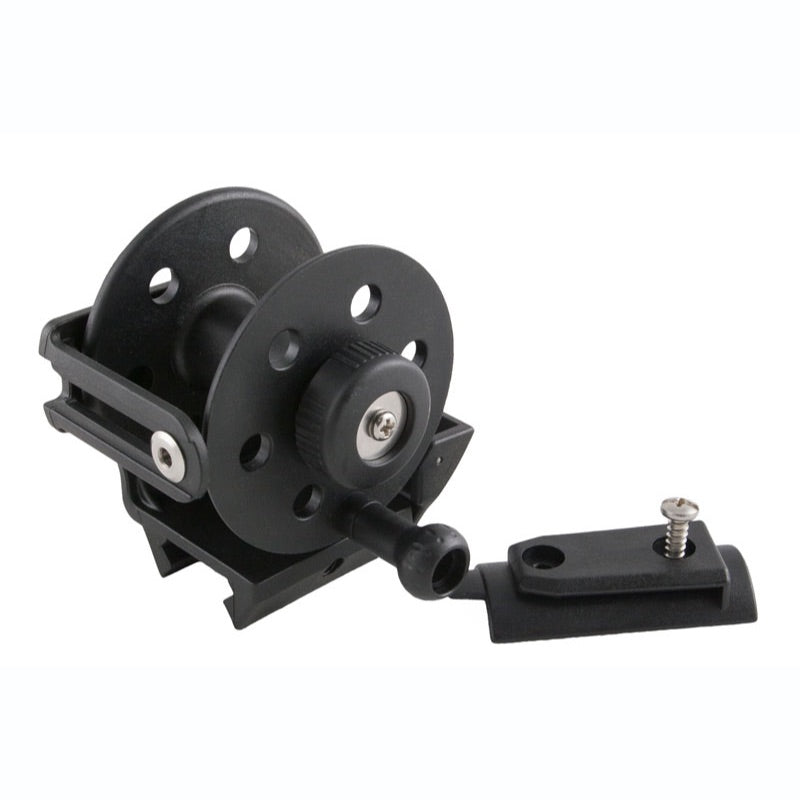
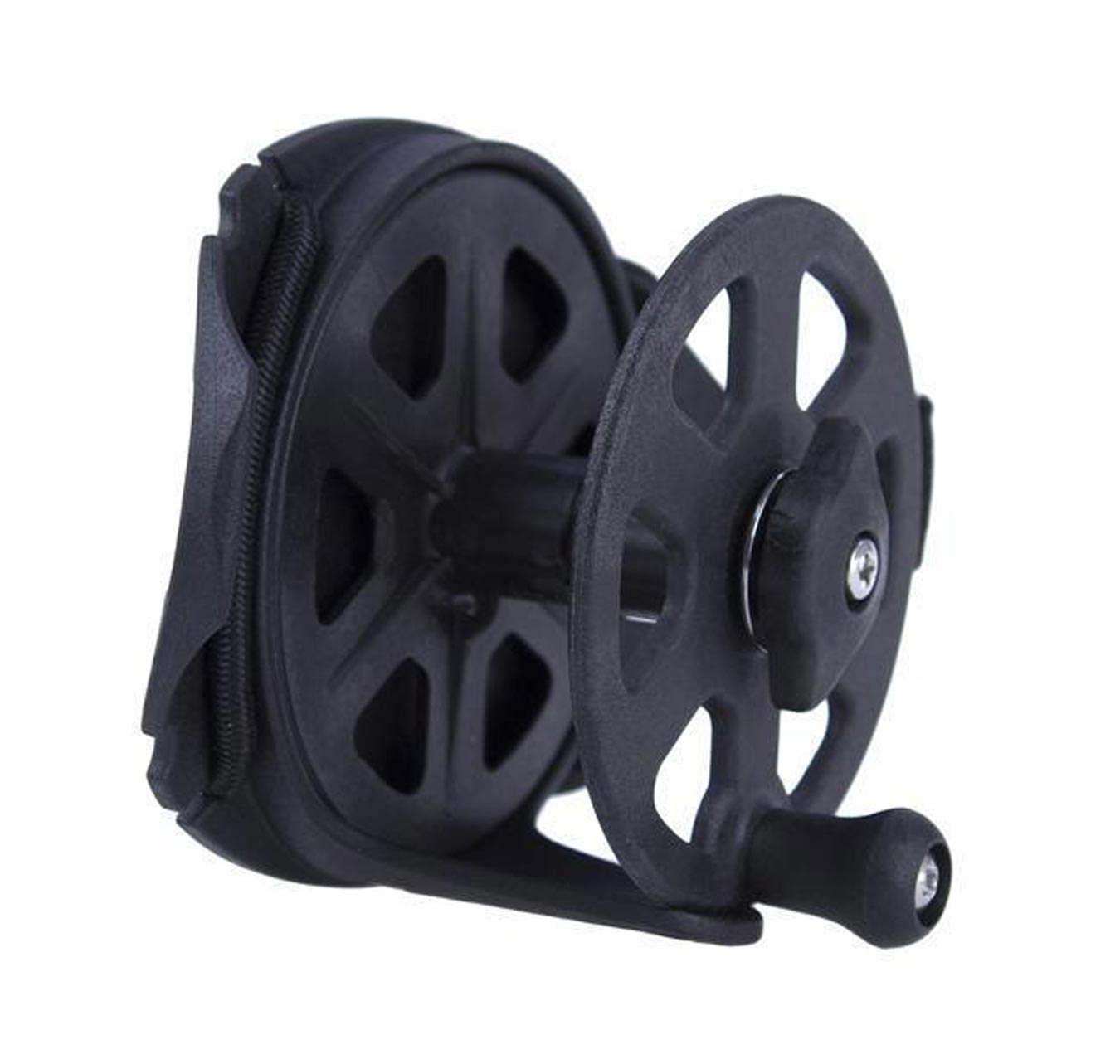
Best for: gun reels suit reef and inshore divers. Skip if: you regularly target pelagics that strip a full spool.
Choosing a Speargun Reel Line That Won't Let You Down
Dyneema is a common choice for speargun reel line: it is braided, abrasion resistant and strong for its diameter.
Thicker line is stronger and easier on the hands, but it fills the spool faster.
- 1.3mm: light, packs plenty of metres, good for smaller fish and clean water.
- 1.9mm: stiffer, less tangle-prone, better abrasion resistance.
- 2mm: heavy-duty, best for hard-fighting fish around structure.
Aussie Reels Dyneema Reel Line is sold by the metre at $3.00 per metre in 1.9mm, rated to 310kg. Order the length you need and it arrives as one continuous piece.
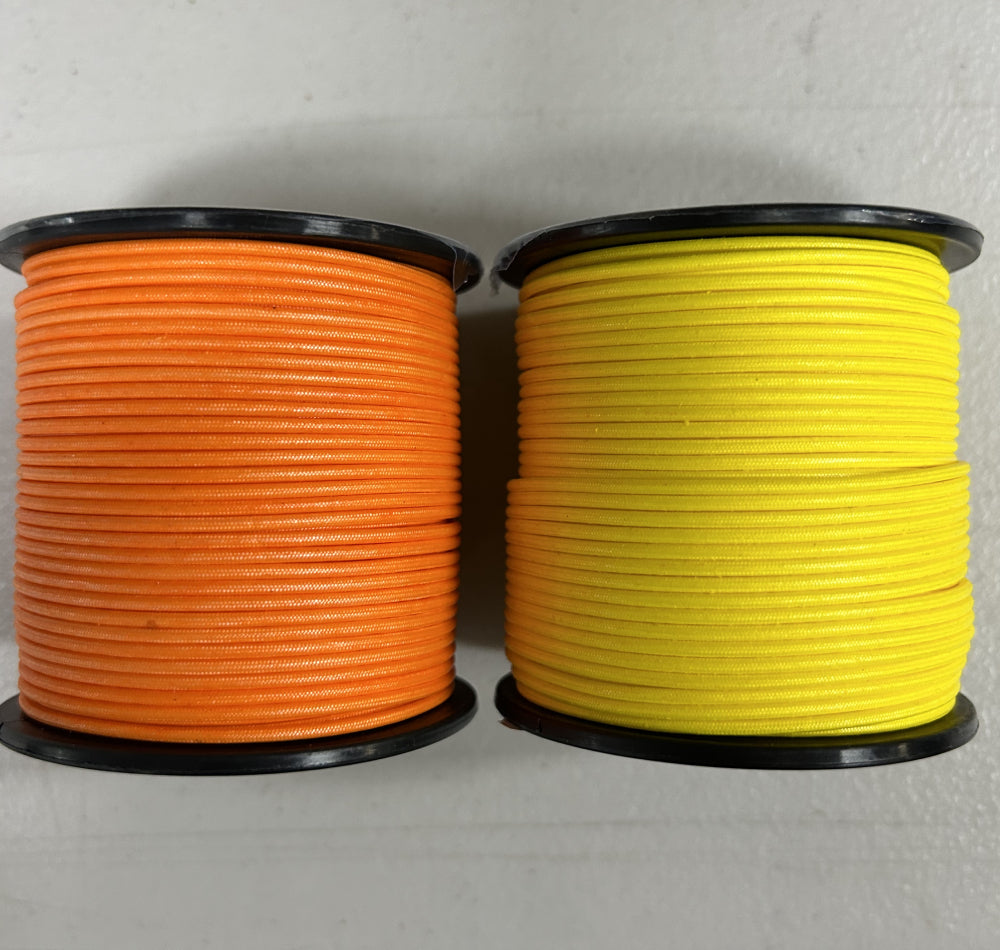
Best for: 1.9mm suits most reef hunting. Skip if: you need maximum capacity for big pelagics, where a thinner line makes more sense.
Speargun Reel Capacity: Matching Spool Size to Target Species
Reel capacity is the length of line a spool holds at a given diameter, and matching it to your target species is what stops a fish from spooling you. Small reef fish need less line; pelagics can strip a spool in seconds. But capacity alone is not the whole story, line diameter, reel type, gun length, and diving conditions all interact. Use the selection matrix below to narrow your choice before you buy.
A practical reel-and-line selection matrix
The table compares common setups against gun length, target species, and typical conditions. Treat it as a starting point, not a rigid rule, your own hunting style and the reel's stated capacity will refine it.
| Gun length | Target species | Typical conditions | Reel type | Line diameter | Approx. capacity needed |
|---|---|---|---|---|---|
| 75-90 cm | Reef fish, bream, flathead | Inshore, clear to murky | Gun reel | 1.3-1.5 mm | 30-40 m |
| 90-110 cm | Snapper, trevally, mackerel | Reef and inshore | Gun reel | 1.5-1.9 mm | 40-50 m |
| 110-130 cm | Kingfish, cobia, small tuna | Reef edges, inshore pelagic | Gun reel or belt reel | 1.9-2.0 mm | 50-60 m |
| 130 cm+ | Large pelagics, wahoo, tuna | Bluewater, strong current | Belt reel | 2.0 mm+ | 60 m+ |
The Rob Allen Vecta Belt Reel, for example, holds 60 m of 1.8 mm Dyneema or 90 m of 1.5 mm. That difference matters when a fish runs.
Line diameter, strength, and capacity trade-offs
Diameter affects four things at once: spool capacity, handling, abrasion resistance, and breaking strength. A thicker line is stronger and easier on the hands, but it fills the spool faster. A thinner line packs on more metres and cuts through the water, yet it is less forgiving against reef and rock. The table below shows the trade-offs for common diameters; breaking strengths are indicative and vary by manufacturer.
| Diameter | Typical breaking strength | Capacity impact | Best use |
|---|---|---|---|
| 1.3 mm | ~200-250 kg | Highest capacity | Small fish, clean water |
| 1.5 mm | ~250-300 kg | High capacity | General reef |
| 1.9 mm | ~310 kg | Moderate capacity | Reef and structure |
| 2.0 mm | ~350 kg+ | Lowest capacity | Heavy structure, big fish |
Aussie Reels Dyneema Reel Line is sold by the metre at $3.00 per metre in 1.9 mm, rated to 310 kg. Order the length you need and it arrives as one continuous piece.
Matching capacity to your reel's rating
Once you have a target diameter and capacity from the matrix, check it against your reel's stated rating. If you are matching capacity to species, a 50 m reel line roll such as the Salvimar Acidyne Green 1.3 mm at $109.00 gives you a known quantity to spool against your reel's rating.
Watch out: a reel rated for 50 m of 1.5 mm will hold noticeably less of 2.0 mm line, so recalculate capacity whenever you change diameter.
Speargun Reel Setup and Mounting Without Guesswork
Mounting a speargun reel starts with checking the gun's mounting holes and confirming the reel's base lines up. The Ocean Hunter Redback Reel is designed to fit the Redback Rail Gun but will also fit many other models of speargun. The Salvimar Max Gun Reel is compatible with all Salvimar spearguns and carries up to 50 m with a high-pressure smooth drag system. The Ocean Hunter Redback Reel is manufactured from glass-filled nylon with stainless fittings.
Step-by-step installation and spooling
Follow these steps in order.
- Dry-fit the reel. Hold the reel against the gun's mounting holes and check that the base sits flush. Confirm the line guide clears the barrel and does not foul the line release.
- Mark and drill if needed. If the holes do not align, mark new positions with a centre punch. Drill pilot holes slightly smaller than the screws to avoid cracking the nylon base.
- Apply a thread-locking compound to the screws if the manufacturer recommends it, then snug them down in a cross pattern. Do not over-tighten.
- Thread the line through the line guide or fairlead before tying to the spool.
- Tie the line to the spool arbor with a secure, low-profile knot such as a uni knot or arbor knot. Trim the tag end close.
- Wind on under light, even tension, guiding the line evenly across the spool. Fill to just below the spool lip, leaving room for the drag to pay out cleanly.
- Run the line through the gun's line release and attach it to the shooting line using a suitable connection (e.g., a loop-to-loop or swivel).
- Test the drag and payout in shallow water before your first hunt. Pull line off under light load and check for smooth release and no bunching.
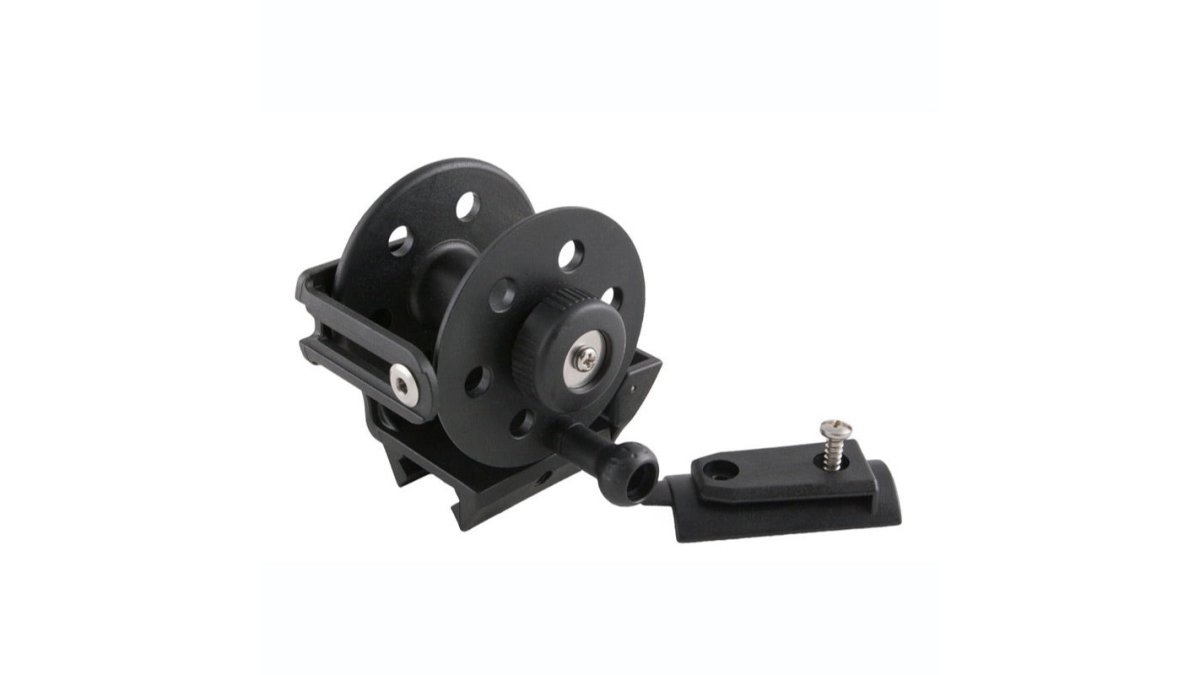
Expected result: smooth line payout with no bunching and a drag that gives line under load.
Watch out: over-tightening mounting screws can crack a nylon base, and a reel that sits too far forward will foul the line release, always dry-fit and check clearance before drilling.
Step-by-Step: Spooling and Rigging Your New Reel Line
Spooling a speargun reel correctly means winding line on under light, even tension so it beds down without tangling. Loose coils bunch and jam on the first run.
- Thread the line through the reel's line guide or fairlead first.
- Tie the line to the spool arbor with a secure, low-profile knot.
- Wind on under light tension, guiding the line evenly across the spool.
- Fill to just below the spool lip, leaving room for the drag to pay out cleanly.
- Run the line through the gun's line release and attach it to the shooting line.
- Test the drag and payout in shallow water before your first hunt.
Expected result: smooth line payout with no bunching and a drag that gives line under load.
Maintenance Checks That Prevent Reel Failures
Reel problems often start small, such as a frayed line or a stiff drag. A quick rinse in fresh water after every dive and a visual check of the line near the fairlead will catch most problems early.
Check the drag tension, the line guide for wear and the mounting screws for looseness before each trip. Replace reel line when it shows fraying, flat spots or stiffness, and re-spool if the line has been sitting stretched on the spool for a long season.
- Rinse the reel and line in fresh water after saltwater use.
- Inspect the first metre of line at the fairlead for abrasion.
- Check drag smoothness by pulling line off under light load.
- Replace worn line rather than risk a failure mid-fight.
Build Your Reel and Line Package at Fergo's
Matching reel, line and gun as one package can help avoid compatibility surprises.
If you are ready to act, a complete reel-and-line package such as the Rob Allen Timberline Roller with reel and line at $1,899.00 pairs a matched gun, reel and Dyneema line in one purchase.
Our team can help you match line diameter to your reel's capacity and your target species, and we price match any Australian-based retailer.
Frequently Asked Questions
What type of line is best for a speargun reel?
Braided Dyneema is the standard choice for speargun reel line. It has very low stretch, high abrasion resistance and a high breaking strain for its diameter, so it packs onto a spool without bulk. A 1.9mm line such as Aussie Reels Dyneema carries a 310kg breaking strain, while thinner options like the 1.3mm Salvimar Acidyne still break above 140kg. Thicker line suits bigger fish and rougher reef; thinner line gives you more capacity on the same reel.
How much line should I put on a speargun reel?
Match speargun reel capacity to your target species and gun. A 50m spool covers most reef and inshore work, while 60m to 90m of thinner line suits pelagic hunting where fish run. The Salvimar Max Gun Reel carries up to 50m, and the Rob Allen Vecta Belt Reel holds 60m of 1.8mm or 90m of 1.5mm Dyneema. Leave a small gap below the spool rim so line pays out smoothly instead of rubbing.
How do you attach a reel line to a speargun?
Tie the reel line to the spool arbor with a low-profile knot, wind it on under light tension, then run it through the line guide and attach the free end to your shooting line or bungee with a double overhand or figure-eight knot. Check the line sits in the guide and releases cleanly before every dive. A tidy, evenly wound spool is the single best defence against tangles when a fish takes off.
Do you need a reel on a speargun?
Not always. A float line works well for shallow reef hunting where you can let the gun go and follow the float. A reel gives you controlled line payout, keeps the gun in your hand and lets you fight a fish with drag rather than chasing a float. If you hunt in caves, around structure or for larger fish that run, a reel is the more versatile setup.
Can you use braided fishing line on a speargun reel?
Standard braided fishing line can work in a pinch, but purpose-made spearfishing reel line is a better fit. It is built stiffer, with a tighter jacket that resists abrasion against reef and handles the repeated shock of a shot without flattening. Lines like Platypus Dyneema Shooting Line or Ocean Hunter Battle Braid are designed for reel use, so payout stays smooth and the line recovers without bunching.


