


Last Updated: October 23, 2026
Quick Summary
How to catch tailor from the rocks involves positioning yourself near white water and current lines where these aggressive predators hunt, then casting fresh whole pilchards on gang hooks or metal lures into the turbulent zones. Present your bait or lure close to where waves crash and currents collide, retrieve with a stop-and-go motion, and strike hard when you feel a bite.
- Fish during moving tides (rising or falling) rather than slack water when tailor feed most actively
- Use whole fresh pilchards on size 2 or 4 gang hooks, or metal lures between 20-42 grams for distance and vibration
- Cast 20-40 metres into white water and current lines where baitfish get trapped, not close to the rocks
- Wear rock shoes or wading boots with sticky rubber soles and never fish alone on unfamiliar platforms
- Set the hook immediately with a firm upward motion when you feel a strike, then keep your rod tip up while reeling steadily
Table of Contents
- Understanding Tailor and Rock Fishing Conditions
- Rock Fishing Safety and Access Planning
- Best Bait for Tailor From the Rocks
- Best Lures for Tailor and How to Fish With Lures
- Essential Tackle Setup for Rock Fishing Tailor
- Step-by-Step Method for Catching Tailor From Rocks
- Common Mistakes to Avoid When Rock Fishing for Tailor
- Frequently Asked Questions
Understanding Tailor and Rock Fishing Conditions
Learning how to catch tailor from the rocks starts with understanding where these fish live and what conditions bring them to feed. Tailor, also called Australian salmon, are aggressive predators that hunt shallow, turbulent water near rocky structures, following baitfish into white water, current lines, and around reefs where prey gets trapped.
Tailor respond to movement, turbulence, and live or wounded baitfish. They hunt in the chaos, not deep water.
Where tailor feed on rock platforms
Tailor hunt in specific zones on rock platforms. They position themselves where white water meets clearer water, where currents collide, and where baitfish have nowhere to escape. Look for these feeding areas:
- White water zones where waves crash and create foam and turbulence
- Current lines where fast-moving water meets slower water, creating a visible edge
- Weed patches and kelp beds where baitfish shelter and get trapped
The key is finding where baitfish congregate. Where you see smaller fish, you'll find tailor hunting.
Reading white water, current, and wave conditions
Churning white water with foam indicates strong wave action and turbulence, ideal for tailor, because baitfish lose their bearings in the chaos.
Current is equally important. Tailor position themselves just outside the fastest flow, waiting for baitfish to be pushed toward them.
Wave height and swell direction matter too. Larger swell creates more turbulence and brings tailor closer to shore; smaller swell pushes them deeper.
Best times, tides, and weather conditions
Tailor feed most actively during moving tides. Slack water is often quiet; rising and falling tides push water, move baitfish, and trigger feeding.
Best conditions for rock fishing tailor:
- Incoming tide with wind pushing water onto rocks
- Early morning or late afternoon when light is lower
- Overcast days when tailor move shallower
Avoid slack water and dead-calm conditions. Tailor need movement and turbulence to hunt effectively.
Rock Fishing Safety and Access Planning
Rock fishing is more dangerous than beach or boat fishing: rocks are slippery, waves are unpredictable, and there's no room to retreat. Assess the platform and plan your exit before you fish.
Assessing rock platforms before you fish
Walk the platform in daylight before you fish. Look for:
- Stable footing with minimal algae or slime (these make rocks treacherous)
- Wave surge patterns by watching several sets of waves and noting how high they reach
- Safe exit routes in case a larger swell arrives
Never fish alone on an unfamiliar platform. Check weather and swell forecasts before heading out, large swell can arrive suddenly and cut off your exit.
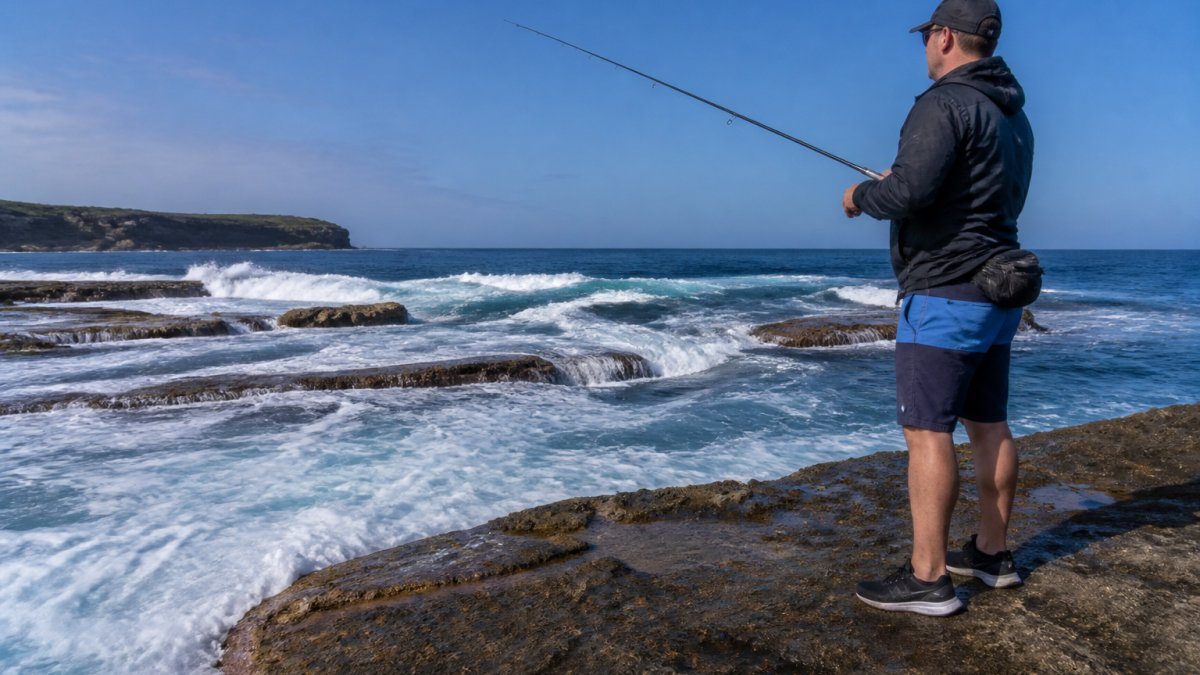
Essential safety gear and footwear
Proper footwear is non-negotiable. Soft-soled rock shoes or wading boots with good grip are essential; hard-soled shoes, trainers, and sandals offer no grip on wet rock.
Essential safety items:
- Rock shoes or wading boots with sticky rubber soles
- A secure bag or backpack to keep hands free
- A headlamp or torch if fishing at dawn or dusk
Never fish in heavy swell or extreme conditions. If waves are larger than chest height or if you feel unsafe, leave the platform. Fish will be there tomorrow.
Best Bait for Tailor From the Rocks
Tailor respond to live bait and fresh dead bait. Pilchards are the classic choice, but the key is fresh bait that moves or smells strongly.
Pilchards and whole bait presentation
Pilchards are the gold standard for tailor: oily, strong-smelling, and naturally shaped like the baitfish they hunt.
Why pilchards work:
- Strong oil scent that carries in white water
- Natural shape and size match tailor's natural prey
- Tough skin that stays on the hook through casting
Thaw them just before fishing so they're fresh and supple.
Whole mackerel, mullet, or herring also work, fresh, whole baitfish that smell strong and move naturally in the current.
Present bait close to white water and current lines.
Gang hooks and bait rigging setup
A gang hook rig holds a whole baitfish securely and improves hook-up rates. You can find quality hooks for live bait rigs to set up your presentation.
Basic gang hook rig setup:
- Main line (20-30 lb breaking strain)
- Leader (15-20 lb, about 60 cm long)
- Two size #2 or #4 gang hooks tied in tandem
The gang spreads the baitfish's weight, keeps it swimming naturally, and improves strike detection.
Tie the top hook through the baitfish's mouth and thread the bottom hook into the flank just behind the dorsal fin.
Tailor respond strongly to fresh whole baitfish presented near white water and current lines.
| Bait Type | Key Advantage | Presentation |
|---|---|---|
| Pilchards | Strong oil scent, natural shape, tough skin | Whole fish on gang hooks near white water |
| Mackerel | Fresh, whole, strong-smelling | Whole fish on gang hooks near white water |
| Mullet | Fresh, whole, strong-smelling | Whole fish on gang hooks near white water |
| Herring | Fresh, whole, strong-smelling | Whole fish on gang hooks near white water |
Best Lures for Tailor and How to Fish With Lures
Lures are highly effective for rock fishing tailor. Metal lures and hard-body lures both work, depending on conditions and casting distance.
Metal lures and lure selection
Metal lures cast far, sink quickly, and create strong vibration that tailor detect in turbid water, mimicking wounded baitfish.
The Jackson Metal Effect Long Cast 22g and Jackson Metal Effect Long Cast 42g are purpose-built for rock fishing.
Hard-body lures like the Jackson Athlete Slim 14FS and Jackson Athlete Slim 14SS mimic baitfish profile and work well in mid-range water.
Jackson Metal Effect Long Cast 22g →
Casting distance and retrieving techniques
Distance matters on rock platforms. You need to reach white water and current lines where tailor hunt.
Casting technique for distance:
- Use a smooth, controlled casting motion (not a hard snap)
- Lead with your elbow, not your wrist
- Follow through fully toward your target
Once your lure lands, retrieve with purpose. Don't reel steadily, use a stop-and-go retrieve: reel 2-3 turns, pause for a second, reel again.
In white water, retrieve faster to keep the lure visible and create vibration.
Essential Tackle Setup for Rock Fishing Tailor
Your rod, reel, and line must handle rock fishing's demands: casting distance, setting hooks in hard mouths, and fighting strong fish in turbulent water.
Rod, reel, and line strength
A surf combo is ideal for rock fishing. The rod length provides casting distance. The reel's power handles strong tailor.
Choose a rod rated for 15-20 lb line.
Your main line should be 20-30 lb breaking strain.
Pair your main line with a monofilament or fluorocarbon leader of 15-20 lb.
Leader and hook size selection
Your leader connects your main line to your rig, absorbing strike shock and protecting against abrasion.
Hook size depends on your bait:
- Whole pilchard: size #2 or #4 gang hooks
- Metal lure: size #2 or #4 trebles (usually pre-rigged)
- Hard-body lure: size #4 trebles (usually pre-rigged)
Larger hooks hold bigger baits and improve hook-up rates; smaller hooks are more subtle but less effective for whole baitfish.
Test your leader strength before fishing. Tie a knot, wet it, and pull hard.
Step-by-Step Method for Catching Tailor From Rocks
Here's a practical method that works consistently on rock platforms.
Step 1: Scout and position yourself
Arrive 30 minutes early. Walk the rocks safely, identify white water, current lines, and feeding zones, and position yourself where you can cast into white water without overbalancing.
Stand with your feet shoulder-width apart, weight low and centred. Never turn your back to the water, a surprise wave could sweep you off balance.
Step 2: Present bait or cast lures
If you're using bait, cast toward white water and hold tension on the line. Let the current carry the scent and keep the baitfish moving naturally.
Cast repeatedly into the same zone. Tailor often follow lures or bait into the zone before striking. Multiple casts improve your chances. Change your retrieve speed or lure colour if you're not getting strikes after 10-15 casts.
Step 3: Detect the bite and set the hook
Tailor strikes are aggressive. You'll feel a hard pull or see your rod tip bend sharply. When you feel a strike, set the hook immediately with a firm, upward motion.
If you're using bait, maintain light tension and watch your line. A tailor taking bait will pull hard. Strike immediately when you feel resistance.
Step 4: Land tailor safely on rocks
Once hooked, keep your rod tip up and reel steadily. Don't rush.
As the fish nears the rocks, guide it toward a calm zone if possible.
When the fish is close, be ready to grab it or use a net.
Never lean over the edge to land a fish. Stay stable on the rocks.
Common Mistakes to Avoid When Rock Fishing for Tailor
Ignoring tidal movement. Slack water is dead time.
Using stale bait. Fresh, oily bait like pilchards outperforms old, dry bait every time.
Casting too close. Many anglers fish the rocks right in front of them.
Giving up too soon. Tailor can be quiet for 30 minutes, then active for 10.
Frequently Asked Questions
What is the best bait for catching tailor from the rocks?
Pilchards are the most effective bait for tailor from rock platforms. Use whole pilchards rigged on gang hooks to maximise visibility and movement in the water. Fresh bait works better than frozen, as the scent travels further in current. Cast near white water, reef edges, and weed patches where tailor hunt for food. Gang hook rigs allow the bait to move naturally and attract strikes from aggressive tailor.
What lures work best for tailor off the rocks?
Metal lures and hard-body baitfish lures are most effective for rock fishing tailor. The Jackson Metal Effect Long Cast range (22g or 42g) delivers exceptional casting distance and flash in the water, making it ideal for reaching distant feeding zones. Hard-body lures like the Jackson Athlete Slim mimic natural baitfish and produce the wobbling action tailor respond to. Match lure weight to conditions: lighter lures for calm water, heavier ones for rough surf and strong current.
What time of day is best for catching tailor from the rocks?
Early morning and late afternoon produce the most consistent bites, as tailor feed actively during low-light periods. Check tide times before you fish: tailor feed most aggressively during the last two hours of the incoming tide and the first two hours of the outgoing tide. Avoid slack water (the period between tide changes). Overcast days and conditions with moderate wind and swell often produce better results than flat, bright days.
How do you safely land tailor after catching them from rocks?
Keep steady footing and use a net or gaff to bring tailor onto the rock platform. Never attempt to hand-land tailor, as they are strong and have sharp gill plates. Position yourself away from wave surge and slippery areas before the fish reaches you. Once landed, keep the tailor away from the edge to prevent it from returning to the water. Handle with wet hands or a cloth to protect the fish's scales, and follow responsible catch-and-release or handling practices.
Rock fishing for tailor rewards patience, good technique, and respect for the water. The fish are there, you just need to find the white water, present your bait or lure confidently, and stay safe on the rocks. Our team at Fergo's Tackle World can help you choose the right rod, reel, and tackle for your rock fishing adventures. Contact us to discuss your setup, or visit our stores in Wollongong or Taren Point for expert advice on gear selection and technique.


